


2025-11-30
At the "2025 WTA • Xianghu Dialogue" held recently in Hangzhou, China, both Chinese and international guests engaged in in-depth discussions on the theme "From Vision to Practice: Global Actions and Collaboration for Sustainable Tourism".

Moderator: Mr. George Cao, Co-Founder and CEO of Dragon Trail International
Panelists:
Ms. Alejandra Frausto Guerrero, Secretary of Tourism of Mexico City, Mexico
Mr. Michael Helleman, Acting General Manager, Office of Tourism and the Visitor Economy, Australian Trade and Investment Commission
Ms. Kiss Bernadett, Head of International Relations Department, Visit Hungary
Ms. LOU Yejie, Director-General of Hangzhou Municipal Bureau of Culture, Radio, TV and Tourism, China
Dr. Ujhelyi István, President of EU-China One Belt One Road Culture, Education, Tourism and Economic Development Committee
Here is a transcript of the discussion:

Moderator: In today’s fast-evolving global tourism landscape, the pursuit of sustainable development has become a shared global consensus. However, striking the right balance between environmental preservation, economic growth, and social well-being remains an ongoing challenge worldwide. I would now like to invite each of our esteemed panelists to share their experiences and insights on this important issue.
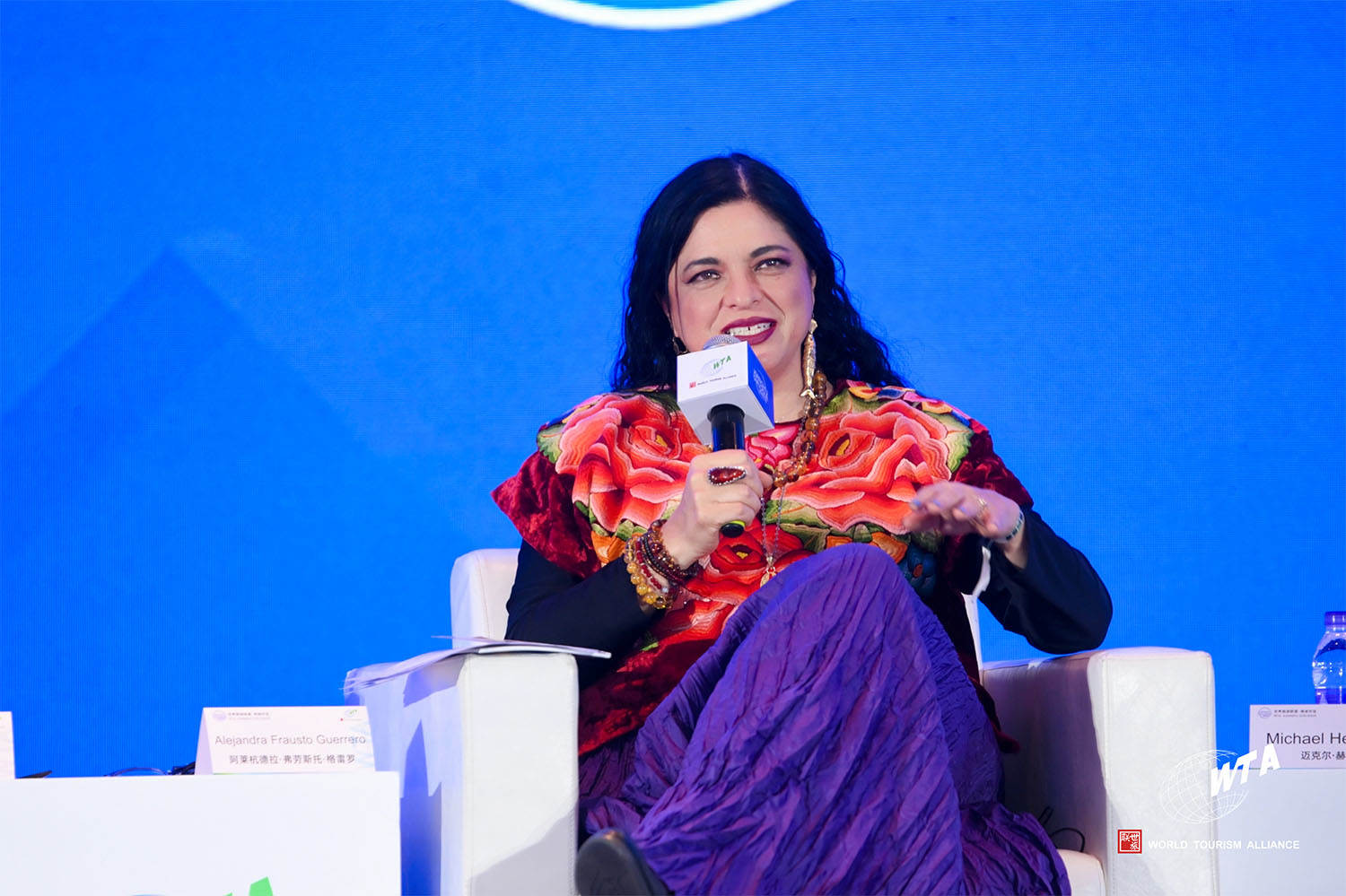
Ms. Alejandra Frausto Guerrero: Mexico, much like Chinese civilization, boasts a rich and storied history. What we hold most dear is the profound wisdom of our local communities and the enduring legacy of their cultural traditions. Today, Mexico City has evolved from a small ancient settlement into a bustling metropolis with a population exceeding 20 million. Yet, its southern regions still safeguard cultural heritage that stretches back over 700 years. This preservation is a testament to our deep respect for indigenous communities, as well as our unwavering commitment to safeguarding and passing down the invaluable wisdom and traditions of our ancestors. We also focus on protecting forests, water sources, and biodiversity. 60% of Mexico City’s area consists of green spaces, providing citizens with diverse recreational areas. For indigenous peoples, the land and cultural traditions passed down from their ancestors are highly valued. Therefore, we strive to find a balance between economic development, humanistic care, and environmental protection. Just as China advocates "common prosperity", we also hope that tourism development will drive economic growth while maintaining community vitality, protecting traditional cultures, and ensuring that people can share in the fruits of development. We have also compiled the "Guidelines for Sustainable Development of Tourist Attraction" and, for the first time, translated it into Chinese, with the aim of sharing Mexico City’s experience in preserving indigenous wisdom and values, while also showcasing how we have successfully balanced economic development, environmental conservation, and social progress.

Mr. Michael Helleman: We must advocate for the global tourism industry to strike a harmonious balance between environmental protection, cultural preservation, and sustainable development. In 2024, 580,000 Australian visitors traveled to China, and by 2025, Australia is expected to welcome nearly 1 million Chinese tourists. This two-way exchange is a truly positive and promising development. Against this backdrop, we are now considering, at the government level, how to move beyond traditional metrics such as visitor numbers, industry revenue, and employment, and adopt a more comprehensive approach to assess the overall impact of tourism. To this end, Tourism Australia has established a dedicated research and analysis team to create an integrated evaluation framework, aimed at assessing the impact of tourism from social, cultural, environmental, and other dimensions. This open tool supports the development of the tourism industry and is freely available for use by tourism professionals in any country, helping governments at all levels better understand the state of tourism development. We have developed Australia’s tourism development strategy for 2030 and look forward to working together with partners such as the OECD and its member countries to promote the sustainable development of the tourism industry.
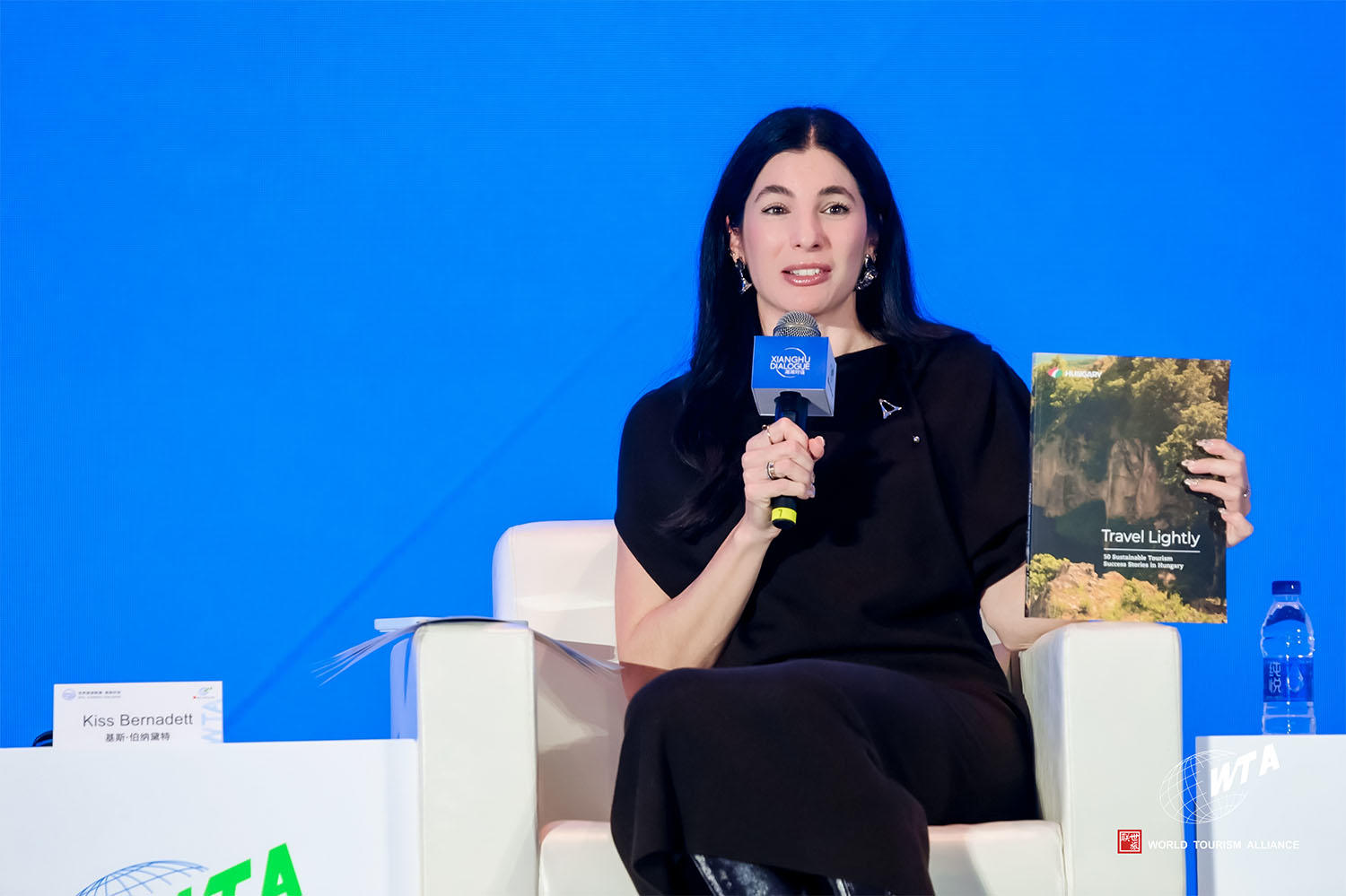
Ms. Kiss Bernadett: During my time working at the United Nations, I had the honor of co-chairing the Sustainable Development Goals working group alongside Kenya, where we collaborated to drive the UN General Assembly to adopt resolutions focused on sustainability. For Hungary, achieving the Sustainable Development Goals through tourism has always been a central priority. We place greater value on long-term objectives over short-term profits, with a particular focus on safeguarding natural landscapes and cultural heritage. Today, I am pleased to present a new publication co-authored by the Hungarian Tourism Agency and a research institute in Copenhagen. This comprehensive work includes a wealth of successful case studies from sectors such as hotels, wineries, and restaurants. It provides a detailed account of how sustainable development measures can be effectively implemented. These are not merely theoretical concepts, but proven, practical solutions that offer tangible pathways for the industry to move toward sustainable development. We are excited to share these valuable insights and engage in a meaningful discussion on the future of sustainable tourism with all of you.

Dr. Ujhelyi István: I would like to cite an example. When people travel to Los Angeles in the United States — whether for the World Cup or the upcoming Olympics — tourists from Eastern Europe, Asia, and Africa are often struck by certain local phenomena. For instance, the standard size of carry-on luggage used around the world is almost universally the same. This is not due to government regulation, but rather a consensus that has naturally developed between passengers and airlines. This example underscores an important truth: to establish truly effective, sustainable, and intelligent tourism services, we need a globally recognized set of rules and certification systems. While hotel rating systems are widely accepted across the globe, national standards for sustainability vary greatly, creating challenges for coordination. Therefore, I propose that the World Tourism Alliance (WTA) and UN Tourism collaborate in establishing a unified global system and set of standards, adopting consistent terminology, so as to ensure that all countries follow the same guidelines when defining and implementing sustainable tourism.

Ms. Lou Yejie: A thousand years ago, Hangzhou served as the capital of the Wuyue Kingdom and later the Southern Song Dynasty. Around that historical period, figures like King Qian Liu of Wuyue, along with literary luminaries Bai Juyi and Su Dongpo — both of whom held official positions here — devoted significant effort to the preservation and dredging of West Lake. Their actions reflected an unwavering commitment to ecological priority and green development, embodying a collective cultural ethos rooted in Eastern aesthetics. In recent years, we have remained faithful to this philosophy. We have consistently advanced the comprehensive preservation of West Lake, while undertaking systematic ecological restoration and cultural resource protection of the Grand Canal, Xixi Wetland, Xianghu Lake, and the Qiantang River. In order to minimize disturbance to nocturnal wildlife, the lighting around West Lake is dimmed at night. Some hotels have even introduced incentive programs that reward guests for choosing low-carbon accommodation, encouraging environmentally responsible behavior. In September of this year, UNESCO convened the 5th World Congress of Biosphere Reserves in Hangzhou — a recognition of the city’s long-standing commitment to sustainable development. Visitors to Hangzhou are invited to appreciate not only its waters, but also its mountains. The mountain ranges encircling West Lake form part of the Tianmu Mountain system; situated along the 30°N latitude, they display a remarkable vertical distribution of biodiversity. Many international visitors are astonished that such ecological richness exists in such close proximity to a thriving metropolis. It is no exaggeration to say that Hangzhou is a city in which the principles of sustainable development are woven into the very fabric of its identity.
Moderator: Drawing on your experiences, what are some exemplary models of success in sustainable tourism that we can learn from?
Ms. Kiss Bernadett: In Hungary, we’ve built small eco-hotels nestled in protected green areas. They offer immersive workshops and culinary experiences, embodying the "zero food waste" principle to give guests a direct taste of sustainable living. This high-quality experience has contributed to a steady increase in repeat visits. Additionally, we have launched community-based tourism initiatives that encourage visitors to explore local communities outside Budapest. Hungary boasts a well-developed network of hiking trails, where visitors can travel by train, bike, or on foot from Budapest. Notably, the vast expanse of these trails caters to tourists of varying physical abilities. In Hungary, sustainable tourism seamlessly blends ancient traditions with modern innovations, providing visitors with a rich and diverse cultural experience.
Mr. Michael Helleman: We need to approach sustainable development from a broader perspective, particularly within the context of Australia’s tourism economy. Australia has long upheld environmental protection as a core value, and we take great pride in this tradition. Coming from Sydney, I can relate to the healthy competition between Sydney and larger cities like Melbourne, similar to the relationship between Beijing and Shanghai in China. Melbourne’s superior tap water quality is a testament to its environmental standards and the residents’ commitment to sustainable living. As a Sydneysider, I often enjoy hiking along the coastline, taking in the breathtaking sea views — an activity that many locals and visitors cherish. We look forward to every visitor strengthening their commitment to sustainable principles. In the future, we hope tourism operators will take a more proactive role in integrating into the sustainable tourism development framework. Achieving this will require the collective efforts of all stakeholders, as well as individual contributions from every practitioner.
Ms. Alejandra Frausto Guerrero: Mexico City is strengthening its dedication to environmental sustainability, actively aligning with global multilateral environmental agreements. Given its scale and the millions of vehicles on its streets, the city has placed green transportation at the forefront of its urban agenda. Chapultepec Park, one of the city’s defining green spaces, spans 800 hectares and provides valuable recreational space for citizens. It also plays a key role in environmental education, offering cultural exhibitions and tourism activities that promote awareness about sustainable practices. This focus on engaging the public is integral to shifting societal behavior towards greener lifestyles. Though Mexico City may not have as many towering skyscrapers as cities like Shanghai, traffic pollution remains a pressing issue. To combat this, the city is focusing on electric vehicles (EVs) and enhancing the green transportation infrastructure, aiming to make low-carbon mobility the city’s new norm. The FIFA World Cup 2026 will be an important opportunity for Mexico City to showcase its sustainability efforts on a global stage. The city is working diligently to make the event a benchmark for environmental responsibility, with a "zero-waste" approach to ensure minimal environmental impact and promote sustainability to a wider audience.
Dr. Ujhelyi István:Currently, the global tourism industry faces shared challenges in pursuing sustainable development. Many countries seek to grow tourism while protecting their ecosystems, yet struggle with limited funding for necessary infrastructure. Whether building hotels or developing attractions, every nation aims to advance tourism within an environmental framework — a goal that calls for international cooperation. Banks and financial institutions can partner with these countries to co‑build sustainable and smart tourism infrastructure. In this regard, there is significant potential for collaboration between China and Europe. We must not only generate economic returns from tourism, but also ensure those returns are reinvested into local communities, ecological restoration, and other sustainability‑focused initiatives.
Ms. Lou Yejie: I would like to share two case studies of destination development. The first is OōEli Complex, located in central Hangzhou. Although not a traditional scenic spot, it has emerged as a new cultural tourism landmark, attracting young visitors from around the world. The project has revitalized 8,000 square meters of space, incorporating a retreat-style rooftop where Hangzhou’s renowned Longjing tea trees are grown — a design that thoughtfully integrates local cultural heritage. Today, OōEli gathers global institutions from architecture, fashion, and the arts, blending a library, art gallery, café, and other lifestyle offerings into one cohesive experience. It draws youth through its visual appeal, contemporary lifestyle, and year-round lineup of high-quality cultural events. The government has further nurtured this ecosystem by establishing the OōEli International Creative District, fostering a vibrant cultural and tourism cluster. The second example is Feiniaoji Homestay, a rural cultural tourism initiative. Through designer-led spatial transformation, the homestay skillfully incorporates a café, library, and bookstore, bringing high-end destination appeal to a remote countryside setting. These cases illustrate that successful cultural tourism destinations thrive on four key elements: design-driven vision, artistic and trend-forward appeal, integrated multi-format offerings, and collaboration between government and enterprise.
Moderator: Given that sustainable tourism demands collaboration across sectors, how do we structure an effective cooperative mechanism?
Ms. Kiss Bernadett: Sustainable tourism cannot be realized by any single actor — whether local government, hotel, or airline. It requires the united commitment of all stakeholders, built on deeper understanding and a shared pursuit of mutual progress. Only through such collaborative effort can the long-term viability and resilience of our industry be secured.
Mr. Michael Helleman: Australia plays an active role in the APEC Tourism Working Group, with a focus on marketing sustainable destinations. We have drawn valuable insights from the success of countries such as Thailand and the Philippines in community-based tourism and are deepening partnerships across the Asia-Pacific. This reflects our strong commitment to shared responsibility and collaborative progress in sustainable tourism.
Ms. Alejandra Frausto Guerrero: In Mexico, we often say that different crops can thrive together on the same land — a concept of agricultural coexistence that enriches the harvest. This idea is woven into the garment I wear today, designed by a Mexican indigenous artist yet crafted from Chinese silk. Without the partnership between our two cultures, this piece — blending the creativity and wisdom of both nations — would not exist. Sustainable tourism operates on the same principle: only through cooperation can tourism truly benefit communities and safeguard nature.